Event Cleaning Services in Lakeview Chicago
Lakeview Event Cleaning for Wrigley Field, Gallagher Way, Northalsted Market Days, Chicago Pride Fest, Southport Corridor Venues, Music Box Theatre, Schubas Tavern, and Neighborhood Event Spaces
Event Cleaning Chicago provides post-event cleaning services in Lakeview for concert venue managers, sports hospitality coordinators, street festival organizers, Northalsted business district event directors, corporate event planners, private venue operators, and rooftop event managers who need same-night restroom reset, bar and concession zone remediation, street corridor sweepdown, hard-floor and carpet recovery, waste stream separation, and documented site handback before permit windows close.
⭐⭐⭐⭐⭐ 5.0 Rating | 100+ Chicago Events Cleaned | OSHA-Aligned Chemical Safety SOPs | DCASE Permit-Aware Cleanup Protocol | Bonded & Fully Insured | Large-Scale Street Festival and Venue Cleaning | Available Game Nights and Concert Nights
"The Concert Ended at Midnight. Northalsted Was Still Packed at 2 AM. And the Festival Ran Three Days Across Half a Mile of Halsted Street. Now Every Surface Has to Be Ready Before the City Comes Back Through."
That is the pressure no one in Lakeview warns you about until the street stays dirty overnight.
Lake View, Chicago is Community Area 06 on Chicago’s North Side — a 3.13-square-mile neighborhood with a 2023 population of 101,163 residents, making it the second-largest Chicago community area by population. (Wikipedia: Lake View, Chicago) According to Wikidata, Lakeview spans ZIP codes 60613 and 60657, with a population density of approximately 32,300 people per square mile — one of the highest concentration rates on the North Side. The neighborhood encompasses distinct sub-districts: Wrigleyville, anchored by Wrigley Field (a National Historic Landmark and home of the Chicago Cubs since 1916); Northalsted (commonly called Boystown), one of the first officially recognized LGBTQ+ neighborhoods in the United States; and the Southport Corridor, a dense stretch of independent music venues, restaurants, and boutique event spaces running from Belmont Avenue to Addison Street.
That geography produces a unique and high-density event cleaning problem. Lakeview does not host one kind of event. It hosts all of them simultaneously and at large scale — often within a few blocks of each other.
Wrigley Field operates 20 distinct private event spaces across its campus, from the AbbVie 1914 Club beneath home plate to full ballpark buyouts. Gallagher Way, the open-air plaza on the west side of the ballpark along Clark Street, hosts year-round outdoor events including night markets, fitness classes, movie nights, and corporate receptions — all generating post-event asphalt, turf, and outdoor surface cleanup needs. Northalsted Market Days, the Midwest’s largest street festival established in 1982, draws over 300,000 attendees across two days — now expanded to three days — along a half-mile corridor on North Halsted Street from Belmont to Addison, with 3 music stages, 2 local band stages, a dance floor, and more than 150 food and merchandise vendors. (Wikipedia: Northalsted Market Days) The Chicago Pride Fest draws over 100,000 attendees the weekend before the Pride Parade. The Chicago Pride Parade itself attracts more than 1 million spectators annually along a 2-mile route through Lakeview — making it the city’s second-largest parade. (Chicago Pride)
Each of these events generates a distinct post-event cleaning problem. Research on festival waste quantification from Stockton University’s LIGHT program, drawing on data from the nonprofit organization Powerful Thinking, found that approximately 6 pounds of waste is generated per person per day at music festivals.
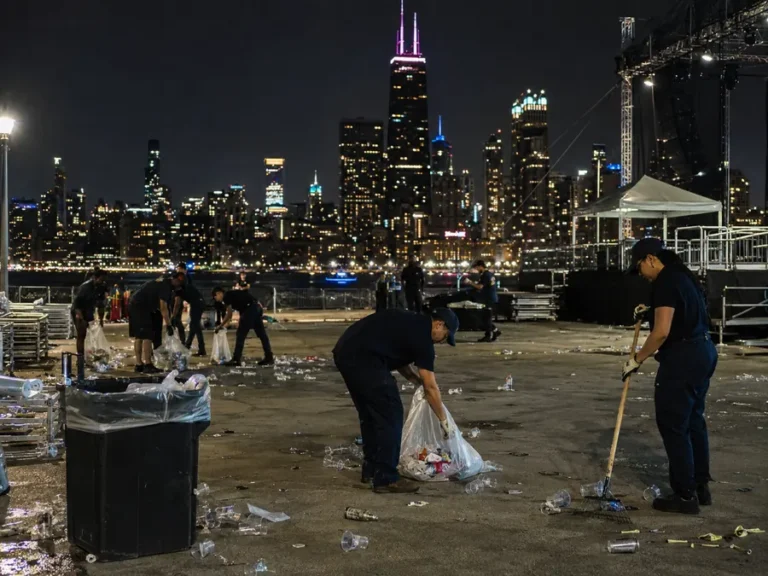
Applied to Northalsted Market Days’ 300,000 attendees over three days, that translates to a theoretical upper-bound waste load exceeding 900 tons across the event’s full run — the overwhelming majority of which concentrates on a single half-mile street corridor. Even at a fraction of that rate, the post-festival cleanup scope on Halsted Street is categorically different from an indoor venue cleanup. Festival waste research additionally notes that food festivals generate 3 to 5 pounds of waste per attendee per day — higher than standard outdoor events — due to packaging, organic waste, and vendor materials. With 150+ food and merchandise vendors operating across Northalsted Market Days, the food-waste density per linear foot of street is significant.
The DCASE 2025 Special Events Resource Guide makes one requirement explicit: event organizers are responsible for cleaning and maintaining the permitted site throughout the duration of the permit. A Certificate of Insurance for $1,000,000 in Commercial General Liability, naming the City of Chicago-DCASE as an Additional Insured, is required for all permitted street events. All organizers must also submit a completed security plan, emergency action plan, and medical plan as part of the permit application. That insurance obligation extends to the site restoration — which means a Lakeview street festival organizer who hands back a dirty corridor is not just dealing with a building manager complaint. They are dealing with a documented permit compliance failure that affects their ability to run the same event next year.
Indoor Lakeview event cleaning carries a separate set of surface risks — different from the street corridor problem but just as specific. Schubas Tavern at 3159 N. Southport, housed in a landmark 1903 Schlitz tied house, has a brick-and-wood interior with unfinished and semi-finished surfaces that respond differently to cleaning chemistry than a modern epoxy floor. Tied House, the connected restaurant venue, features white marble bar surfaces and a fireplace garden — both of which require surface-specific chemistry protocols. The Music Box Theatre at 3733 N. Southport, open since 1929 and the largest full-time independent film theater in Chicago, has faux marble and Italian-courtyard-style loggia architecture. These are not generic commercial surfaces.
The sections below cover every Lakeview event zone — from Wrigley’s private clubs to Gallagher Way’s outdoor plaza, from Northalsted’s half-mile festival corridor to the Southport Corridor’s intimate brick-and-wood music rooms — with the specific cleaning sequence, surface protocol, and compliance documentation each one requires.
Lakeview's Event Zones — What's Actually Being Cleaned After Each One
Wrigley Field Private Events (1060 W. Addison St.)
Wrigley Field is a National Historic Landmark with 80 suites, 4 major club spaces, and 20 distinct private event venues across the ballpark campus. The AbbVie 1914 Club, located directly beneath home plate, serves premium groups with exclusive lounge access. The Nuveen Suite Level accommodates groups of 14 to 24 in traditional luxury box configurations. For large-scale events, the full ballpark buyout hosts up to 41,649 guests. Post-event cleanup at Wrigley spans concrete concourse surfaces, carpeted suite interiors, hardwood club floors, food and beverage service areas in proximity to historic stadium structures, and exterior plaza zones. The Wrigley Field Events team manages 20 spaces simultaneously for large events — which means the cleanup plan must account for multiple surface types and access routes coordinated around ballpark operational schedules.
Gallagher Way Outdoor Plaza
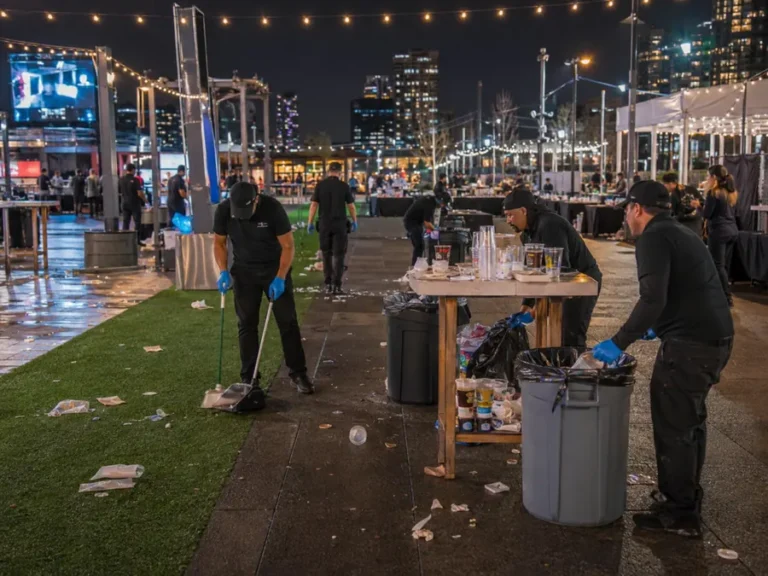
Gallagher Way, the open-air plaza adjacent to Wrigley Field on Clark Street, hosts year-round programming including night markets, live music, fitness classes, outdoor movie screenings, and corporate receptions. The surface is a mix of paved plaza, turf, and street-adjacent asphalt. Post-event cleanup depends on the event type: market nights generate vendor waste, food packaging, and beverage containers across approximately 30,000 square feet of open plaza. Concert nights add crowd-density debris to the same footprint. Unlike an indoor venue, there is no loading dock — cleanup crews work around CTA foot traffic, nearby bar service spillover from Clark Street, and Wrigley Field’s operational scheduling.
Northalsted Market Days and Chicago Pride Fest Corridor
Northalsted Market Days runs along Halsted Street from Belmont to Addison — approximately half a mile of closed street — from Saturday 7 AM through Monday 1 AM. (Northalsted Business Alliance) Chicago Pride Fest occupies the same Halsted Street corridor the prior weekend, also running multiple days with 3 performance stages, 150+ vendors, and a $20 suggested donation entry. Both events leave the same type of post-event footprint: asphalt and sidewalk debris from beverage cups, food packaging, vendor waste consolidation, napkins, promotional materials, bar waste adjacent to 20+ Halsted Street bars and restaurants, and stage perimeter debris at 3 to 5 distinct stage zones across the corridor length.
Music Box Theatre and Southport Corridor Venues
The Music Box Theatre at 3733 N. Southport has 700 seats and a faux marble and loggia-style interior influenced by Italian and Spanish architecture. Private screenings and events generate post-event restroom reset, lobby floor recovery, and bar-area cleanup within a historic 1929 building. Schubas Tavern at 3159 N. Southport — housed in the 1903 Schlitz tied house — has exposed brick walls, wood floors, and a 250-person standing capacity that generates high-density bar spill, cup debris, and restroom turnover pressure on concert nights. Tied House adds a white marble bar, floor-to-ceiling windows, and a private garden courtyard with fire-feature seating — each requiring different chemistry and surface protocols.
Wrigleyville Game-Night and Concert-Night Bar Corridor (Clark Street, Sheffield Avenue)
On Cubs game nights, concerts, and sold-out Wrigley events, the Clark Street and Sheffield Avenue corridor generates high-volume outdoor debris from thousands of fans moving between the ballpark, rooftop venues, and street-level bars. Rooftop venues along Waveland and Sheffield Avenues — 11 official Wrigley rooftop event spaces — add private party cleanup to the outdoor footprint. This is not a contained venue cleanup. It is a street-corridor and rooftop-to-sidewalk problem requiring zone teams, not a single crew.
The Specific Risks Nobody Tells You Until the Monday Morning Walk-Through
DCASE Permit Restoration Failure
The DCASE Special Event Permit Application framework requires organizers to be responsible for cleaning and maintaining the permitted site throughout the permit period. Post-festival restoration documentation is part of the compliance chain for permit renewal. Northalsted Market Days streets reopen Monday at 1 AM per the Northalsted Business Alliance’s published schedule — which means the full half-mile corridor must be restored to pre-event condition before that window closes. An organizer who misses that deadline is not dealing with a cleanup inconvenience. They are dealing with an aldermanic and DCASE compliance issue that follows the event’s permit file.
Bar Spill Saturation on Historic Wood and Brick Surfaces
Schubas Tavern is a 1903 Schlitz tied house with original-era brick walls and wood floors. A 250-person standing-capacity concert night generates concentrated bar spill, beer residue, and foot traffic across approximately 1,800 square feet of wood and brick surface. Beer and sugary drink residue left on unsealed or semi-sealed wood floors overnight causes fiber swell, grain raise, and finish adhesion breakdown. The cleanup sequence must start with dry debris removal and absorbent treatment of wet residue before any mopping — applying a wet mop to a beer-soaked wood floor drives liquid deeper into the grain rather than removing it.
White Marble Bar Chemistry Risk
Tied House’s private event bar features white marble bar tops. Marble is a calcium carbonate stone, chemically reactive to acidic cleaning products — the same risk present in Rockefeller Chapel’s stone nave. A standard bar wipe-down with a citrus degreaser or acidic all-purpose spray will etch a white marble surface within minutes of contact. The visible result is dull, cloudy patches that require professional stone restoration to reverse. Post-event bar cleanup on marble requires pH-neutral chemistry confirmed safe for calcium-based stone.
Street Festival Grease Migration on Asphalt
Food festival waste research from Prime Dumpster identifies cooking grease and oil as a distinct waste stream at food-heavy festivals, separate from packaging and cup waste. On a closed-street festival like Northalsted Market Days, food vendor grease migrates from cooking zones onto adjacent asphalt sections, sidewalk joints, and gutter channels. Left untreated overnight, grease residue on asphalt becomes a pedestrian slip hazard and an ongoing staining problem that standard sweeping does not remove. It requires a degreasing agent appropriate for open asphalt, applied before any broad sweeping of the corridor.
Rooftop Surface Variability
Wrigley rooftop venues sit on building rooftops that span multiple structures along Waveland and Sheffield Avenues. Rooftop surfaces include membrane roofing, sealed concrete decking, and treated wood decking — each requiring confirmed chemistry before cleaning. Pressure washing membrane roofing without confirmed PSI limits causes seam damage and water infiltration. Standard floor degreaser on treated wood decking strips the protective coating. Pre-event surface confirmation is not optional for rooftop venues.
The 1 Million Spectator Cleanup Reality After the Pride Parade
The Chicago Pride Parade draws over 1 million spectators annually along a 2-mile route through Lakeview — stepping off at Sheridan and Broadway and concluding at Diversey and Cannon Drive. The City of Chicago OEMC activates the Emergency Operations Center and deploys citywide safety resources for this event. What the EOC does not cover is the private venue and street-adjacent cleanup — restrooms inside bars along the route, private event venues that opened onto the parade corridor, and outdoor seating areas along Halsted that absorbed the crowd’s post-parade residue. That cleanup falls on individual venue operators and event managers, not on city resources.
How We Clean a Lakeview Event — Zone by Zone, Surface by Surface
Step 1: Event Type Classification and Surface Pre-Inventory
Every Lakeview cleanup begins with classification: indoor venue (historic wood, marble, brick, carpet), outdoor plaza (asphalt, paver, turf), street corridor (asphalt, sidewalk, gutter channel), or rooftop (membrane, concrete deck, wood deck). Surface type determines chemistry, tool selection, and sequence. We confirm this before any crew arrives on-site.
Step 2: Bar and Concession Zone Priority — Wet Residue Before Dry Sweep
For concert venues and bar-adjacent event spaces, the bar and concession zone is treated as the first priority — not the last. Beer residue, sugary drink spill, and food grease left on floors overnight increases in adhesion, attracts pests, and on porous surfaces like wood and brick, migrates into the material substrate. We treat wet residue with appropriate absorbent methods before any dry sweep and before any mopping sequence begins.
Step 3: Historic Surface Floor Recovery — Chemistry Confirmed by Surface Type
For wood floors (Schubas Tavern), marble surfaces (Tied House), faux marble architecture (Music Box Theatre), and brick interiors, we use pH-neutral chemistry confirmed safe for each surface. No acidic degreaser on marble. No solvent-based product on semi-sealed historic wood. Dry debris and particulate removal precedes all liquid treatment on every historic surface.
Step 4: Street Corridor Grease and Vendor Waste — Zone Teams, Not a Single Pass
For Northalsted Market Days, Pride Fest, and Wrigleyville game-night corridor cleanup, we divide the street length into sections and deploy parallel zone teams. Food vendor zones are identified first — grease-adjacent asphalt is treated with degreaser before any sweeping begins. Stage perimeter zones are cleared separately. Vendor waste is consolidated and separated into recyclables and general waste streams. The full corridor is photographed section by section for DCASE permit restoration documentation.
Step 5: Restroom Recovery — Documented Per Unit
Every restroom is cleaned, disinfected, and restocked individually. High-traffic event restrooms — particularly in venues adjacent to a 1 million-person parade route — generate compacted paper waste, fixture saturation, and surface contamination that requires a full reset sequence, not a quick pass. Each restroom unit is documented as a separate completion record.
Step 6: Outdoor Plaza and Rooftop Surface Clearing
For Gallagher Way, Wrigley rooftop events, and outdoor Southport patio events, surface type confirmation precedes any cleaning method deployment. Turf and paver zones use different equipment than membrane roofing. All outdoor zones are cleared of organic waste and beverage containers before surface treatment begins to prevent residue embedding during foot traffic wind-down.
Why Lakeview Event Organizers Call Us Instead of a Standard Cleanup Crew
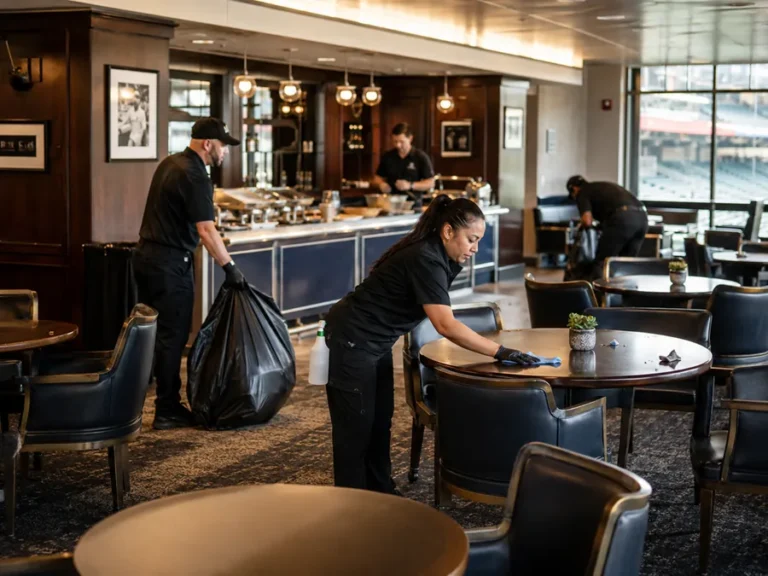
Lakeview event organizers need more than a basic trash pickup after guests leave. Our team handles venue-ready event cleanup for parties, fundraisers, weddings, corporate events, and private gatherings across Lakeview with structured waste removal, floor care, restroom checks, surface cleaning, and fast post-event turnaround.
We Understand the DCASE Permit Restoration Obligation
DCASE’s Special Event framework makes organizers responsible for site cleanup throughout the permit period. Missing that obligation affects permit renewal. We produce zone photographs and handback records before the permit window closes — not after the alderman’s office calls.
Street Festival Scale Is Built Into Our Deployment Model
Northalsted Market Days spans half a mile. The Pride Parade draws 1 million spectators. These are not one-crew events. We deploy zone teams working parallel sections — not a single crew working front to back on a closed street that reopens at 1 AM Monday.
Historic Venue Surface Protocols Are Standard
Wood floors at Schubas. Marble bars at Tied House. Faux marble at Music Box Theatre. Brick interiors throughout the Southport Corridor. Each of these requires specific chemistry and sequence. We do not apply generic floor cleaner to historic surfaces.
Wrigley Field Cleanup Requires Ballpark-Aware Access Coordination
Private events at Wrigley Field involve access coordination across 20 distinct spaces, operational scheduling around ballpark operations, and cleanup that must be complete before the next morning’s facilities walkthrough. We scope Wrigley cleanup specifically — not as a generic venue job.
Beer Residue on Wood Floors Is Treated Before Mopping, Not After
High-volume concert nights at Schubas and Wrigleyville venues leave sugary, sticky residue on wood and brick surfaces. Mopping before treating wet residue drives liquid into porous surfaces and raises wood grain. We treat residue first with absorbent methods, then clean — the correct sequence for historic flooring.
Rooftop Venue Surfaces Require Pre-Confirmed Chemistry
Wrigley rooftop venues span membrane, concrete, and wood decking. Each surface has specific pressure, moisture, and chemistry limitations. We confirm surface type before deploying any equipment or product on a rooftop.
Lakeview Event Cleaning Case Studies
Case Study 1: Schubas Tavern — Sold-Out Concert Night, Full Venue Cleanup
Client type: Venue operations manager Guest count: 250 (standing capacity) Venue footprint: Main performance room (approx. 1,800 sq ft), front bar area, restrooms, exterior entrance zone Surface types: Original 1903 wood floor, exposed brick walls, sealed concrete bar zone Timeline: 4-hour cleanup window, 7 AM opening preparation
The problem:
A sold-out 250-person concert night generated saturated wood floors with beer residue across 1,800 square feet. Sticky cup rings, spilled drinks near the stage perimeter, and tracked-in street debris created a layered contamination problem. Applying a wet mop to a beer-saturated wood floor without prior treatment would drive sugar residue deeper into the wood grain, raise the floor’s surface texture, and leave a tacky film that worsened overnight.
The venue manager needed documentation of floor condition restoration before the morning opening.
What We Did:
Dry debris removal first across the full floor. Wet residue treated with absorbent application in the highest-density zones near the bar and stage. pH-neutral wood-safe cleaning solution applied with controlled, low-moisture technique — no standing water on historic wood. Brick walls spot-cleaned at hand-height contact zones. Restrooms fully reset and documented. Bar area wiped with surface-confirmed chemistry. Floor photographed at completion for venue manager record.
Outcome
No wood floor grain raise, no tacky residue surface, no overnight odor from untreated sugary spill. Venue opened on schedule. Venue manager confirmed floor condition matched pre-event standard. Client name withheld for confidentiality.
Case Study 2: Gallagher Way Plaza — Corporate Night Market Event
Client type: Corporate event coordinator Guest count: 1,200 Venue footprint: Approximately 28,000 sq ft of open plaza, paved and turf zones, vendor station corridor Timeline: 3.5-hour cleanup window, Wrigley ballpark operational schedule constraint
The problem:
A night market corporate event left food packaging, beverage cups, and vendor station residue across 28,000 square feet of Gallagher Way plaza. The event included catering stations generating organic waste and food debris on both paved and turf sections. The cleanup window was constrained by Wrigley Field’s operational schedule — a specific access deadline with no flexibility.
Turf sections required a different clearing approach than paved plaza zones to avoid compressing debris into the turf surface.
What we did:
Turf zones cleared first using hand-collection approach — no machinery on turf sections. Paved zones divided into 4 sections with parallel teams. Vendor station organic waste collected and containerized separately. Beverage cup and packaging debris cleared section by section. Plaza photographed in 4 zones at completion for event coordinator record. Full handback confirmed before the operational access deadline.
Outcome
Full plaza cleared within the Wrigley operational window. Zero turf damage from equipment. Event coordinator received zone documentation before the final handback deadline. Client name withheld for confidentiality.
Case Study 3: Northalsted Street Festival Corridor — Post-Festival Vendor Zone Cleanup
Client type: Festival operations director Footprint: Approximately 0.5 miles of Halsted Street, 3 stage zones, 150+ vendor positions Timeline: Same-night cleanup completion required before Monday 1 AM street reopening
The problem:
A multi-day street festival on North Halsted Street left a full half-mile corridor of post-event waste: beverage cups, food packaging, vendor station organic residue, grease-adjacent asphalt sections near cooking vendors, stage perimeter debris at 3 locations, and mixed recyclables and general waste intermingled throughout. The street was required to reopen at 1 AM Monday per the festival’s published schedule — with DCASE documentation required. Multiple Halsted Street bars and restaurants had continued operating during the festival, adding post-service spill and cup debris adjacent to the festival zone.
What we did:
Divided the half-mile corridor into 8 linear sections with 2-person teams per section. Grease-adjacent asphalt zones near cooking vendors identified and treated with asphalt-appropriate degreaser before any sweeping began. Stage perimeter zones cleared separately at each of the 3 stage locations. Recyclables and organic waste separated from general waste throughout. Vendor waste consolidated at designated collection points. Section-by-section photographs produced across all 8 zones. Handback documentation submitted to festival operations director before the 1 AM reopening deadline.
Outcome
Full corridor cleared and documented before street reopening. DCASE permit restoration documentation accepted without dispute. Festival operations director confirmed full compliance with Monday reopening requirement. Client name withheld for confidentiality.
Testimonials
“Schubas has 1903 wood floors and they can’t be cleaned like a modern bar. Abdullah’s team treated the beer residue before mopping — the right sequence — and the floor was back to normal before we opened. That’s why I call them every time.”
Venue Operations Manager | Schubas Tavern, Lakeview
“Gallagher Way has a hard access deadline because of Wrigley operations. Abdullah’s crew worked in parallel zones across the full plaza, kept the turf clean, and had documentation before the deadline. No drama, no damage.”
Corporate Event Coordinator | Gallagher Way, Wrigleyville
“Half a mile of Halsted Street after Market Days — grease from cooking vendors, three stage zones, 150 vendor positions. They worked in sections, treated the grease correctly, separated the waste, and gave us the DCASE documentation we needed before 1 AM. Exactly what we needed.”
Festival Operations Director | Northalsted Market Days, Lakeview
Lakeview Event Cleaning Pricing
Pricing depends on surface type, venue access scheduling, guest count, bar and food service volume, outdoor or street footprint, vendor density, waste separation scope, DCASE documentation requirements, and handback deadline.
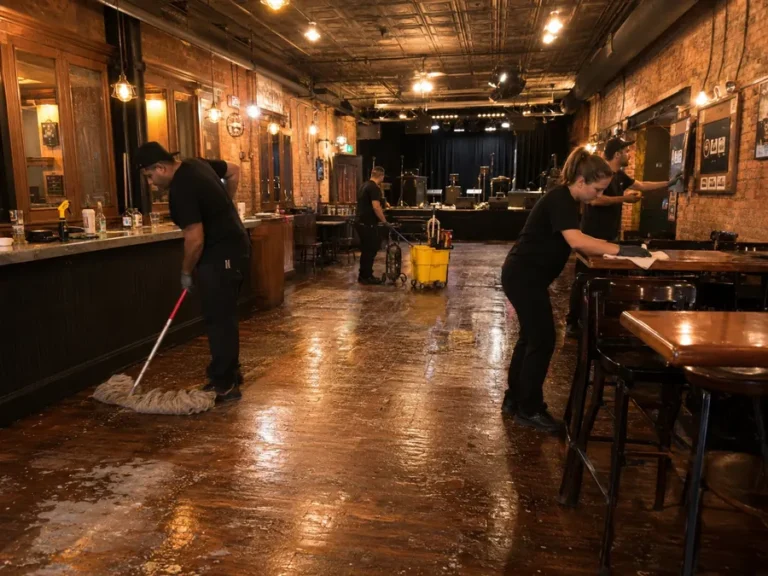
Southport Corridor / Historic Venue Indoor Cleanup (wood floor, brick, marble bar) — up to 3,000 sq ft
Starting at $699
Wrigley Field Private Event Cleanup (club space, suite, or plaza zone)
Starting at $849
Gallagher Way / Outdoor Plaza Event Cleanup — up to 30,000 sq ft
Starting at $999
Street Festival Corridor Cleanup (per half-block section)
Starting at $599 per section
Northalsted Full Corridor or Pride Fest Post-Event Cleanup
Custom quote based on corridor length, vendor count, and stage zones
Rooftop Venue Event Cleanup (surface-confirmed, Wrigley-adjacent)
Starting at $749
Ongoing Game-Night or Concert-Season Contract
Call for contract rate
FAQs About Event Cleaning Services in Lakeview Chicago
Lakeview's Events Are Big. Its Surfaces Are Specific. Both Problems Need the Same Crew.
Half a mile of Halsted Street with 300,000 attendees. A National Historic Landmark ballpark with 20 private event spaces. A 1903 wood-floor tied house that fills to 250 standing capacity every concert night. A marble bar that etches under the wrong cleaning product.
Lakeview events are not solved by sending more people with garbage bags. They are solved by the right sequence, the right chemistry, zone deployment at scale, and documentation that satisfies DCASE permit files before the street reopens.
Call before the festival ends — not after the city sends a notice about the corridor condition.
✅ Northalsted Market Days and Pride Fest corridor cleanup
✅ Wrigley Field private event spaces and Gallagher Way plaza
✅ Schubas Tavern wood floor and Southport Corridor historic venue cleaning
✅ Tied House marble bar and Music Box Theatre surface-safe protocols
✅ DCASE permit restoration documentation before street reopening
✅ Zone-team deployment for half-mile festival corridor coverage
✅ Waste stream separation and recycling consolidation
✅ OSHA-aligned chemical safety SOPs throughout
📍 Serving Lakeview, Wrigleyville, Northalsted, Southport Corridor, Belmont Theater District, Clark Street bar corridor, Sheffield Avenue rooftop venues, Waveland Avenue event zones, and adjacent Lakeview East and West Lakeview neighborhood venue spaces