Event Cleaning Services in Lincoln Park Chicago
Lincoln Park Event Cleaning for Café Brauer, Chicago History Museum, Lincoln Park Zoo, Conservatory Gardens, Mayfest, and Neighborhood Venue Events
Event Cleaning Chicago provides post-event cleaning services in Lincoln Park for corporate event directors, venue coordinators, nonprofit development teams, zoo-event managers, museum rental coordinators, street festival organizers, and private venue operators who need same-night floor recovery, restroom turnaround, catering-zone remediation, outdoor footprint clearing, and documented venue handback.
⭐⭐⭐⭐⭐ 5.0 Rating | 100+ Chicago Events Cleaned | CRI 204 Commercial Carpet Standard Aligned | OSHA-Aligned Chemical Safety SOPs | Bonded & Fully Insured | Zoo and Museum Venue Cleaning | Historic Building Access Coordination
“The Last Guest Left at 10. The Venue Has to Be Ready by 8 AM — and the Floor Cannot Look Like 230 People Were Just Dancing on It.”
That is the pressure after a Lincoln Park event.
Lincoln Park is not a generic cleanup scenario. It is one of Chicago’s most event-dense residential neighborhoods, anchored by a free world-class zoo that hosts everything from 10-person board dinners to exclusive buyout events for 20,000 guests. Lincoln Park Zoo Within a half-mile of Stockton Drive, an event organizer may be managing a historic Prairie-style landmark built in 1908, a Georgian-style museum with stained-glass display cases, an outdoor conservatory garden with restricted flower beds and fountain zones, or a street festival running two stages on Armitage Avenue from Racine to Sheffield.
Every one of those settings carries a different cleaning requirement.
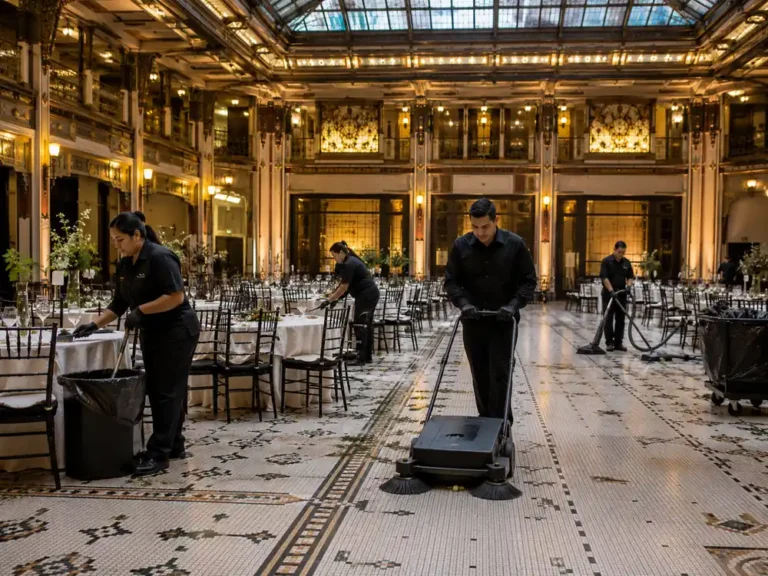
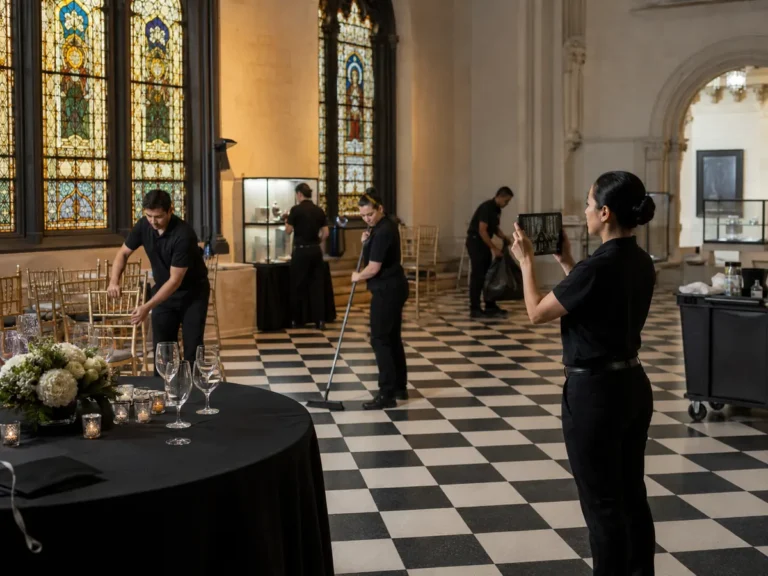
Café Brauer‘s Great Hall — listed on the National Register of Historic Places — has tile mosaics, stained-glass windows, and a soaring skylit roof. The outdoor loggias extend the event footprint to a terrace directly overlooking the Nature Boardwalk pond. The Chicago History Museum‘s Chicago Room accommodates large seated events with backlit stained-glass panels and a distinctive black-and-white tile floor. The Lincoln Park Conservatory and Grandmother’s Garden add open-air and tented event options inside a Chicago Park District-managed property on Stockton Drive.
Each of those surfaces, each of those outdoor zones, and each of those institutional relationships demands a cleanup plan built around the specific venue — not a generic “post-party service.”
Lincoln Park’s risk profile is different from other Chicago neighborhoods. The primary cleaning challenges here are:
Historic surface risk. Tile mosaics, stained-glass-adjacent floors, black-and-white tile, original 1932-era architecture, and Prairie-style finishes cannot be treated with aggressive floor chemistry or abrasive equipment. The wrong approach causes permanent damage.
Mixed indoor/outdoor footprint risk. Lincoln Park Zoo buyout events span animal habitats, lawns, terraces, the Nature Boardwalk pond edge, service paths, and indoor spaces simultaneously. Street festivals like Lincoln Park Mayfest span multiple city blocks across Armitage, creating a waste and debris footprint that extends well beyond the vendor perimeter.
Park District documentation risk. Events on Chicago Park District properties require permit compliance, site restoration, and — in many cases — insurance documentation showing the space was returned to its original condition. That is not satisfied by a general cleanup crew with garbage bags.
Carpet and mixed-flooring risk. Not all Lincoln Park venues are hard-floor only. Venues with carpet sections require compliance with CRI Commercial Standard 204 protocols: structured vacuuming sequences before any liquid treatment, CRI Seal of Approval-certified extractors for embedded soil removal, and low-moisture encapsulation methods for interim maintenance areas. Applying wet methods first on heavily soiled carpet embeds food and beverage residue deeper into the pile.
Lincoln Park cleanup is surface-specific. Historic floors, zoo-adjacent outdoor zones, museum rooms, conservatory gardens, street festival corridors, and carpet sections all need different methods before handback.
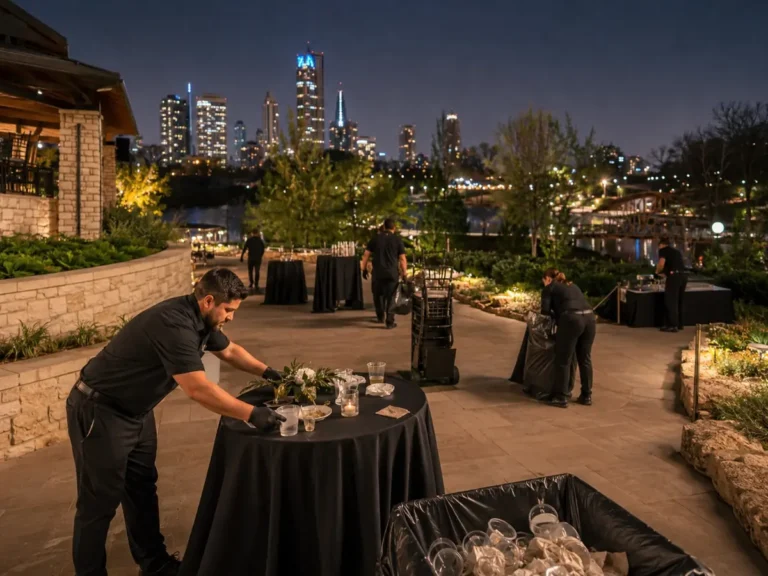
Organic waste proximity risk. Zoo-adjacent events create a cleanup category almost no other Chicago neighborhood produces: food service areas near animal habitats, pond ecosystems, and landscaped native plant zones. Organic waste — uncollected food containers, grease from catering stations, beverage spills — cannot be left adjacent to protected natural areas. Lincoln Park Zoo Nature Boardwalk
The Lincoln Park Park District permit framework also adds compliance stakes. Chicago Park District permit applications for many event types can require insurance, security plans, and site restoration documentation before a permit is formally issued. That means event organizers are often contractually obligated to return the space to a specific condition — not just “clean enough.”
That is why Lincoln Park event cleaning cannot be delegated to whoever answered a last-minute call.
Lincoln Park’s Venue Map — What’s Actually Being Cleaned
Lincoln Park’s event landscape covers five distinct venue categories. Treating them as interchangeable is the most common operational mistake.
🦁 Zoo Rental Events
Lincoln Park Zoo offers rentals across Café Brauer, outdoor loggias, pavilion spaces, animal-habitat areas, and full zoo buyouts. Cleanup requires organic waste priority, surface-specific methods for mosaic tile, and perimeter checks along the pond edge.
🏛️ Museum Venue Events
The Chicago History Museum at 1601 N. Clark hosts events from intimate meetings to large buyouts. The Chicago Room, museum tile, theater areas, restrooms, and outdoor plaza require neutral-pH cleaning chemistry, controlled moisture, and documentation-ready handback.
🌿 Park District Garden and Conservatory Events
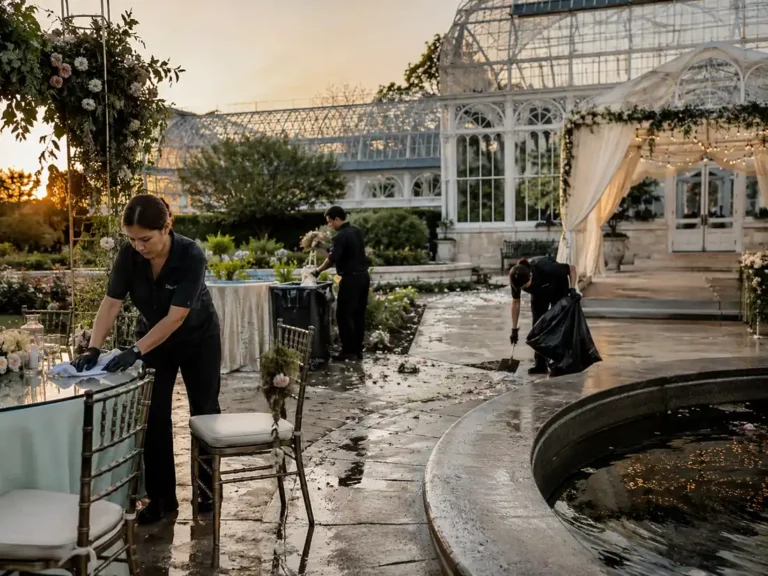
The Lincoln Park Conservatory at 2391 N. Stockton Dr. includes pathways, fountains, statues, gardens, and restricted zones. Cleanup requires access coordination, delivery pass planning, and Park District restoration awareness.
🎪 Street Festival Footprints
Lincoln Park Mayfest and Lincoln Park Greek Fest create multi-block footprints with stages, vendors, bar service, and food concessions. Cleanup includes asphalt and sidewalk sweepdown, recycling separation, vendor waste consolidation, and stage-perimeter debris removal.
🏢 Private Venue Rentals
The Specific Risks Nobody Briefs You On Until It’s Too Late
Lincoln Park cleaning risk is not just volume. It is surface damage, documentation failure, protected outdoor zones, and mixed-floor sequencing. Those problems have to be planned before the crew arrives.
🧩 Tile Mosaic and Historic Surface Contamination
Café Brauer’s Great Hall floor includes tile mosaics installed in 1908. Cleanup after dancing, bar service, and dinner must start with dry debris removal because grit from outdoor loggias can damage grout and mosaic edges when dragged by wet methods.
🌊 Wet Organic Waste Near Protected Ecosystems
The Nature Boardwalk is a prairie pond ecosystem with native plants and wildlife. Catering waste near outdoor zoo spaces requires phased collection, containerization, and removal from the perimeter before surface cleaning begins.
🧼 CRI 204-Applicable Carpet Zones
Mixed-surface venues with carpet need the CRI 204 Commercial Standard sequence: vacuuming before liquid application, spot treatment, encapsulation for interim cleaning, and extraction only when the scope confirms it.
📄 Chicago Park District Site Restoration Liability
Park District permits and city special-event resources can require site restoration, insurance certificates, and permit-file documentation. Missed debris, turf damage, or unrecorded cleanup can become the organizer’s problem. DCASE Special Events Resource Guide
How We Clean a Lincoln Park Event — Surface Type First, Zone Sequence Second
The process starts with surface inventory, organic waste priority, historic-floor protection, carpet recovery where present, restroom reset, catering remediation, and documented handback.
Step 1: Surface Inventory and Zone Mapping
Before a single person arrives on-site, we confirm the venue’s surface types across every zone: tile mosaic, black-and-white tile, hardwood, polished concrete, carpet sections, outdoor asphalt, stone pathways, garden turf, and loggia stone.
Step 2: Organic Waste Priority in Outdoor Zones
For zoo-adjacent, garden, and street festival events, the outdoor organic waste sequence starts immediately after final guests exit. Food containers, beverage cups, bar napkins, and catering waste are collected in parallel sections by zone.
Step 3: Historic and Specialty Surface Floor Cleaning
For tile mosaic, black-and-white institutional tile, and stone surfaces, the sequence is dry debris removal, neutral-pH spot treatment, controlled damp cleaning, and final inspection. No alkaline floor strippers or acidic degreasers on historic tile.
Step 4: Carpet Section Recovery
For carpeted zones, we follow CRI 204 commercial protocol: structured vacuuming first, spot treatment with non-residue solutions, and low-moisture encapsulation for interim cleaning in high-traffic sections.
Step 5: Restroom Recovery
Restrooms are cleaned, restocked, and returned to operating condition. Fixtures, mirrors, sinks, high-touch surfaces, waste, and paper products are recorded separately from the main venue sweep.
Step 6: Catering and Bar Zone Remediation
Catering stations, bar tops, passed-food staging areas, and cocktail tables are cleared, wiped, and returned to pre-event configuration. Food debris and beverage residue are treated as priority zones.
Step 7: Documentation and Handback
We provide handback notes and zone photographs where the venue, building manager, or Park District permit coordinator requires them. Documentation is generated before we leave the site.
Why Lincoln Park Event Organizers Call Us Instead of a General Cleanup Service
Lincoln Park events need historic-surface care, outdoor-first sequencing, carpet protocol, permit documentation, festival-scale cleanup, and OSHA-aligned chemical handling.
1. We Know the Difference Between a Mosaic Floor and a Concrete Slab
2. Zoo and Garden Events Get Outdoor-First Sequencing
3. CRI 204 Carpet Protocol Is Built Into Our Process
Mixed-surface venues need a different carpet sequence than hard floors. We follow Carpet and Rug Institute CRI 204 standards: vacuum before wet treatment, encapsulation for interim maintenance, and extraction only when confirmed.
4. Park District and Museum Documentation Is Standard
5. Festival-Scale Street Cleanup Is Not Indoor Venue Cleanup
6. OSHA-Aligned Chemical Handling Is Non-Negotiable
All cleaning products are handled under OSHA Hazard Communication standards: labeled containers, current Safety Data Sheets, dilution protocols, PPE, and documented training on degreasers, disinfectants, and floor products.
Lincoln Park Events Need Venue-Specific Cleanup, Not Generic Labor
Zoo events, museum events, Conservatory garden events, Mayfest-style street corridors, and neighborhood venues all carry different risks. One crew cannot treat mosaic tile, carpet, turf, asphalt, museum tile, and organic waste zones as the same job.
Our Lincoln Park protocol starts with the surface and the venue relationship. Then the cleanup runs by zones, with documentation ready before the handback.
Lincoln Park Event Cleaning Case Studies
Café Brauer, Chicago History Museum, and Lincoln Park street festival examples. Client names withheld for confidentiality.
Case Study 1: Café Brauer Zoo Rental — Corporate Gala, Great Hall and North Loggia
Client type: Corporate development team
Guest count: 195
Venue footprint: 3,900 sq ft Great Hall + North Loggia terrace + Nature Boardwalk perimeter path
Event type: Seated dinner, open bar, dancing
Timeline: 4-hour cleanup window, 8 AM venue inspection
The problem: The event ran full bar and catering service with guests moving between the indoor Great Hall and outdoor North Loggia. The mosaic floor had food residue, cocktail spills, and tracked-in grit. The loggia had beverage cups, napkins, and hors d’oeuvre debris near the Nature Boardwalk pond edge.
What we did: Outdoor team cleared the loggia and pond perimeter, containerized organic waste, photographed the perimeter, and cleaned the stone surface. Indoor team began dry grit removal on the mosaic floor with soft-bristle equipment before wet treatment. Neutral-pH floor chemistry was confirmed surface-safe. Catering, bar, and restrooms were completed in parallel.
Outcome: Zero surface damage. Zero documentation issues. The venue manager confirmed the Great Hall mosaic was returned in the same condition documented at pre-event walkthrough.
Client name withheld for confidentiality.
Case Study 2: Chicago History Museum Plaza — Nonprofit Gala, Indoor + Outdoor Plaza
Client type: Nonprofit event director
Guest count: 420
Venue footprint: Chicago Room + outdoor plaza
Event type: Gala dinner with live entertainment
Timeline: 5-hour cleanup window
The problem: The Chicago Room’s black-and-white tile floor had three hours of food and beverage service with 420 guests. The outdoor plaza had cocktail-hour debris across open paving. Building management required a signed handback form with before/after photographs.
What we did: Two-team deployment: indoor team on Chicago Room and restroom cluster, outdoor team on plaza clearing. Tile cleaning followed dry sweep, tile-safe neutral chemistry, controlled moisture, and final buff pass. Outdoor plaza was cleared and photographed in sections.
Outcome: Museum building management signed the handback form without dispute. The event director had documentation confirmation before her 9 AM debrief call.
Client name withheld for confidentiality.
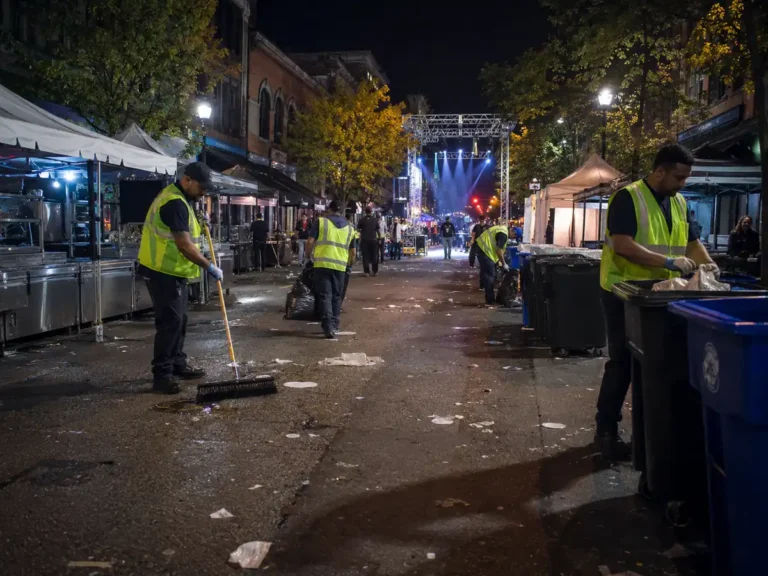
Case Study 3: Lincoln Park Street Festival — Post-Festival Corridor Cleanup, Armitage Zone
Client type: Street festival organizer
Footprint: Approximately 2.5 city blocks on Armitage, 2 performance stages, 30+ vendors
Event type: Multi-day summer street festival
Timeline: Same-night cleanup, City permit restoration deadline
The problem: Three days of vendors, live music, and public attendance left cooking grease residue, compressed organic waste, mixed recycling, general trash, and scattered debris across the corridor.
What we did: Divided the corridor into 6 linear sections with a 2-person team per section. Food vendor zones were prioritized. Organic waste was containerized, grease-adjacent asphalt was treated with appropriate chemistry, waste was sorted, and stage perimeters were cleared separately.
Outcome: Full corridor cleared within the same-night window. Permit restoration documentation submitted without objection.
Client name withheld for confidentiality.
Testimonials
⭐⭐⭐⭐⭐ Corporate Event Manager | Lincoln Park Zoo, Chicago
“Café Brauer has tile mosaics that cannot be cleaned carelessly. Abdullah’s team understood the surface before they touched it — dry sweep first, correct chemistry, no damage. The venue manager was satisfied before the 8 AM inspection.”
⭐⭐⭐⭐⭐ Nonprofit Event Director | Chicago History Museum
“The Chicago History Museum required full zone photographs and a signed handback form. We had everything before my 9 AM debrief. That’s the only way I’ll work post-event cleanup.”
⭐⭐⭐⭐⭐ Festival Organizer | Lincoln Park, Chicago
“Street festival across multiple city blocks, grease from food vendors, recycling everywhere. Abdullah’s crew worked in sections, handled the grease zones correctly, and gave us the photo documentation we needed for the permit file.”
Lincoln Park Event Cleaning Pricing
Pricing depends on surface type, venue access requirements, guest count, food-service volume, outdoor footprint, proximity to protected natural areas, Park District documentation requirements, and handback deadline.
Zoo and Historic Venue Indoor Cleanup — up to 4,500 sq ft
Starting at $799
Outdoor Garden / Conservatory / Loggia Event Cleanup — up to 8,000 sq ft
Starting at $849
Combined Indoor + Outdoor Historic Venue Cleanup
Starting at $1,499
Street Festival Corridor Cleanup — per block zone
Starting at $649 per block section
Full Buyout Zoo Event or Multi-Venue Nonprofit Gala
Custom quote based on scope
Ongoing Seasonal Event Contract — festival season, ZooLights events, recurring galas
Call for contract rate
FAQs About Event Cleaning Services in Lincoln Park Chicago
Yes. We clean the Great Hall tile mosaic floor, outdoor loggias, terrace perimeter, catering zones, restrooms, and Nature Boardwalk-adjacent outdoor areas using surface-appropriate methods and chemistry.
Yes. We handle the Chicago Room, outdoor plaza, McCormick Theater, Guild Gallery, restroom clusters, and secondary event spaces with cleaning protocols matched to each surface type, including the museum’s original tile flooring.
Yes. We provide zone photographs, handback confirmation, and written cleanup records that satisfy Park District site restoration requirements. We generate documentation before we leave the site.
We start with dry grit removal before any wet treatment. Abrasive soil tracked across tile grout causes cumulative surface damage that wet cleaning alone will not prevent. We use neutral-pH chemistry confirmed safe for each surface type and avoid alkaline or acidic floor products on historic surfaces.
Yes. We follow CRI 204 Commercial Standard protocol: structured vacuuming using Seal of Approval-aligned equipment before any liquid treatment, encapsulation methods for interim maintenance, and pre-confirmed hot water extraction for severe spill scenarios.
Yes. We handle multi-block street festival corridor cleanup including asphalt sweepdown, grease-zone treatment, recycling separation, vendor waste consolidation, and permit-file photo documentation.
Yes. We treat organic waste near protected natural areas as a priority collection: containerized before surface cleaning begins and removed from the ecological perimeter zone before the main cleanup sequence continues.
Standard venue events: 1–2 weeks. Zoo buyouts, Park District permits, street festivals, or events requiring pre-confirmed surface access and documentation coordination: 3–4 weeks minimum.
Yes. We coordinate service entry, elevator access where applicable, loading restrictions, and building manager contact for historic and institutional Lincoln Park venues.
Lincoln Park Events Need More Than a Cleanup Crew. They Need a Surface-Specific Plan.
Tile mosaics from 1908 do not clean the same way as a banquet hall floor. A zoo event with 200 guests adjacent to a pond ecosystem does not close the same way as a ballroom dinner. A street festival across three city blocks is not cleaned by four people and two garbage bags.
Lincoln Park has some of Chicago’s most distinctive event venues. They require specific knowledge, correct chemistry, structured sequencing, and documentation.
Call before the event ends — not after the venue inspection reveals what was missed.
✅ Café Brauer tile mosaic and historic surface cleaning
✅ Chicago History Museum event floor and plaza cleanup
✅ Lincoln Park Zoo outdoor event and pond-perimeter clearing
✅ CRI 204 Commercial Standard carpet protocol
✅ Park District site restoration documentation
✅ Street festival corridor cleanup and permit file photos
✅ Neutral-pH and surface-confirmed chemistry throughout
📍 Serving Lincoln Park, Lincoln Park Zoo, Chicago History Museum, Lincoln Park Conservatory, Armitage Avenue corridor, Clark Street venue district, DePaul area event spaces, and adjacent Old Town and Lakeview venue zones.